
June 3, 1864—162 years ago today—marked the final day of the battle of Cold Harbor and the one that saw the most significant fighting, as Grant’s Union forces repeatedly and unsuccessfully attempted to break through heavily fortified Confederate lines. The Union suffered heavy casualties over several days of combat that totaled nearly 13,000 killed, wounded, captured, and missing. Among the 1,845 killed in action was Private George W. Gould, an ordinary soldier from Leicester, Massachusetts, who fell on June 3rd during one of the waves of fierce assaults made by the 25th Massachusetts Volunteer Infantry, giving up his life to save the Union and end human chattel slavery.
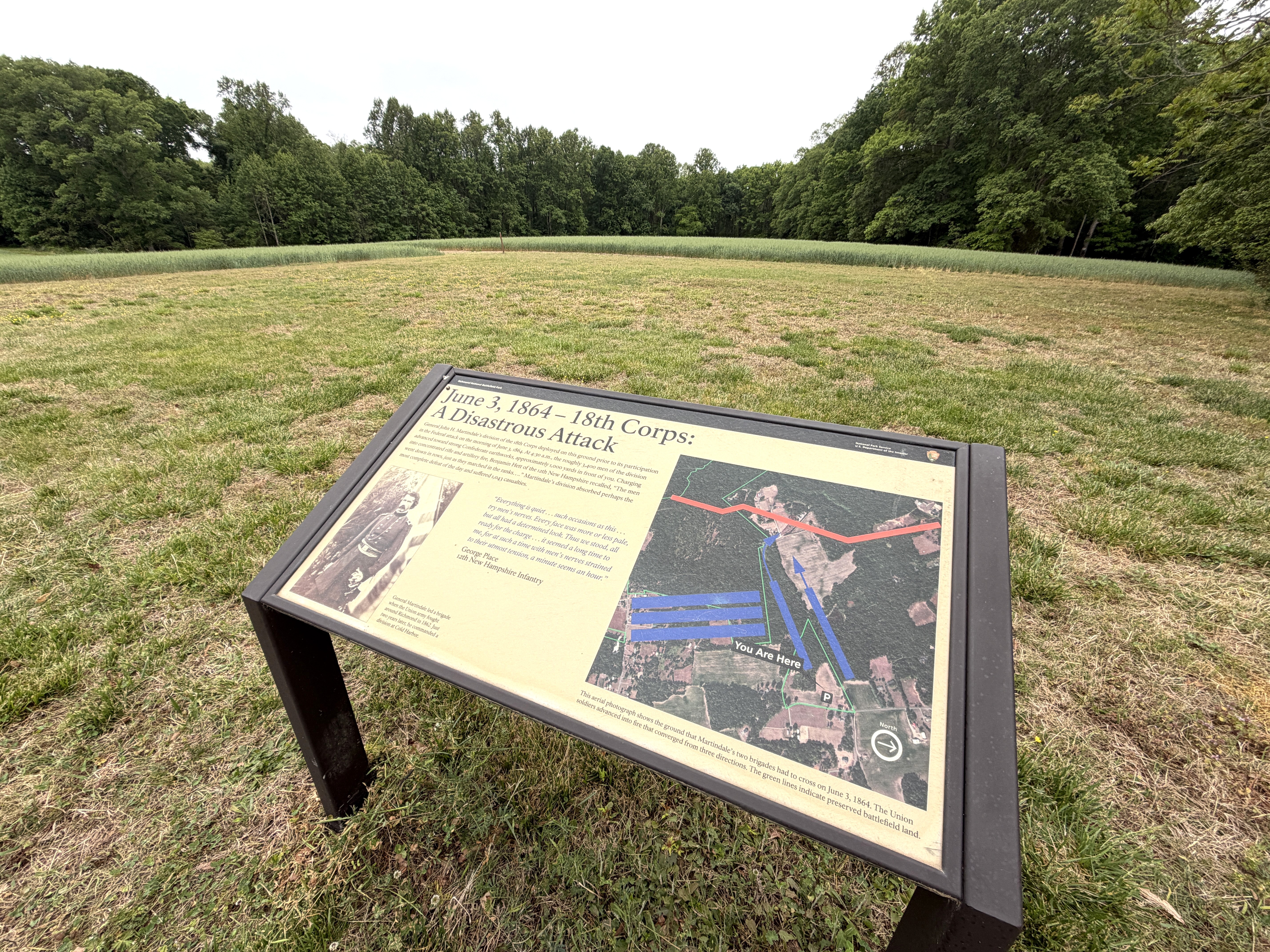
Battlefield marker oriented towards the field at Cold Harbor where Pvt. George W. Gould was killed on June 3, 1864. Stan Prager visited this hallowed ground on May 6, 2026 & took this photo.
This website was created ten years ago to honor the sacrifice of George W. Gould, hosting his previously unpublished letters and championing his role as a common soldier who along with so many thousands of others during four years of Civil War gave up everything so that the United States would endure as one nation, and that slavery, the central cause of secession and war, would be forever abolished.

Flag placed on the grave of George W. Gould in Paxton, MA for Memorial Day 2026
 Fittingly, I visited Cold Harbor for the first time just weeks ago, and I looked out over the now quiet fields where the battle once raged and where Private Gould lost his life. I was welcomed by NPS ranger Mike Gorman, who could not have been more gracious. He shared a wealth of information about the battle while clearly projecting his pride in his role helping to preserve this sacred ground. I was at Cold Harbor with a larger tour group, so I could not get as deep in the weeds as I hoped, retracing the steps George Gould took as he stared into eternity, but I do hope to return again soon for a private tour and a closer look.
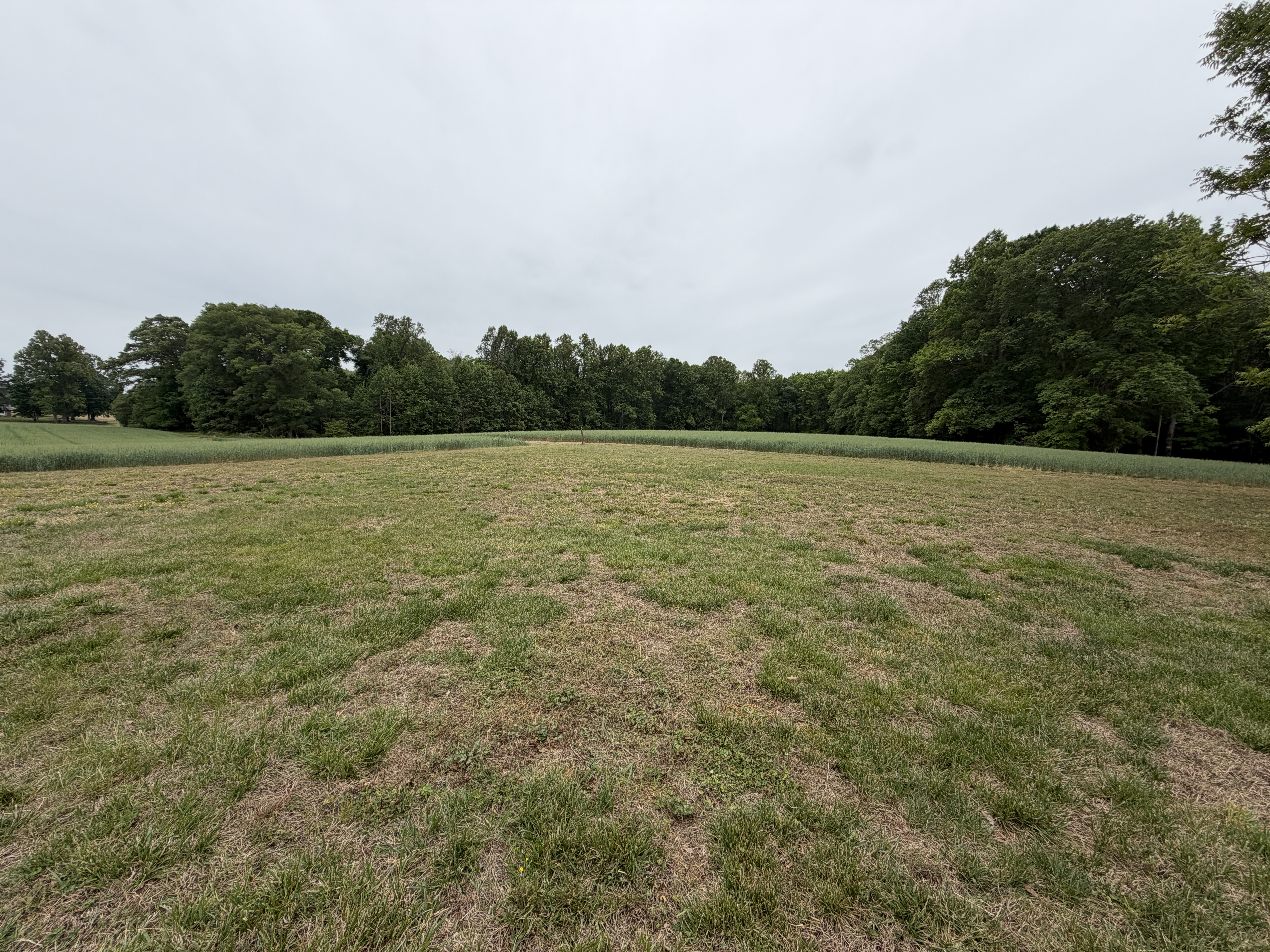
Gazing towards the field at Cold Harbor where Pvt. George W. Gould was killed on June 3, 1864. Stan Prager took this photograph during his visit on May 6, 2026.
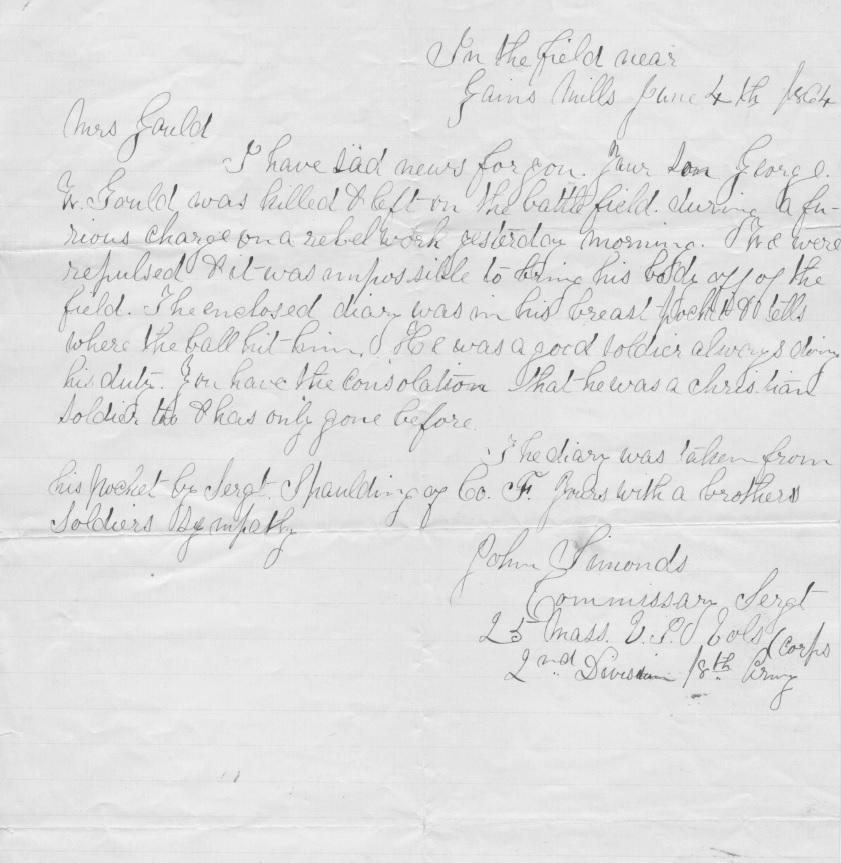
Still, on the day of my visit, I felt myself profoundly moved as I stood on the battlefield not far from where Private Gould breathed his last. His was likely a dreadful ending. The commissary sergeant’s letter to Gould’s mother reporting his death notes that “The enclosed diary was in his breast pocket & it tells where the ball hit him.” The diary is lost, but some might interpret that sentence as an indication that the diary itself manifested physical signs of “where the ball hit him.” I would like to believe that, for that would mean he made a quick end, but I think it is more probable that he was mortally wounded and instead lay there some time after and recorded in his diary “where the ball hit him.” In that case, it is awful to imagine how long he may have remained on the field suffering before he expired. We have no way of knowing that, but we do know that in the aftermath of the battle, Lee was adamant that the wounded could not be tended to until a white flag was offered, as was customary at the time. A horrific four days passed before Grant swallowed his pride and agreed to be the first to fly that white flag to allow a brief truce to retrieve the injured, but by then almost all were dead of their wounds, dehydration, and extreme heat. I would add that I believe the date that appears on the letter to George’s mother—June 4th—was a polite lie born out of kindness, since it would have been impossible for his body to be retrieved until many days later.
 On the last day of his life, Private George W. Gould’s saw action with Brigadier General George J. Stannard’s “Star Brigade”—1st Brigade, 2nd Division, XVIII Corps—with 4 regiments comprised of just 600 men that included the Massachusetts 25th formed up in a double column of 4 stacked lines—rather than deploying in a traditional, extended skirmish line—a relatively recently devised battlefield tactic designed to punch through Confederate works with a compact assault column that at Cold Harbor on June 3, 1864 resulted in shattering losses inflicted by heavy artillery and infantry fire from entrenched forces that could not be dislodged. The 25th Massachusetts suffered a staggering 69% casualty toll that day: 215 men fell out of 310 on the field and 74 of those died, including Private Gould—among the highest percentage casualty rates of any single regiment in a single battle during the war!
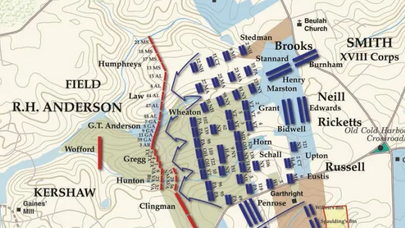 Grant was pilloried by the public for the casualties that day, and he himself later voiced regret over the failed final assaults, but while Lee suffered fewer losses, he was unable to replace them, so the Army of Northern Virginia was left weakened. In the grand scheme of things, the Battle of Cold Harbor was just one piece of Grant’s Overland Campaign, and while the stalemate there stymied his momentum, Grant’s strategy would eventually win the war. As we honor Private George W. Gould, we likewise honor every soldier who made the ultimate sacrifice for this righteous cause.
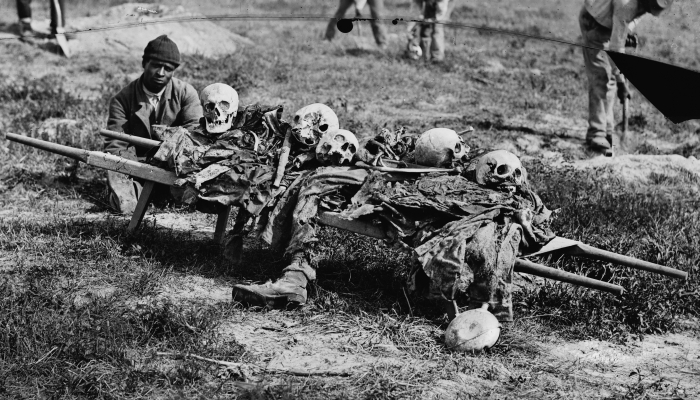
Remains of Union war dead at Cold Harbor

