Researching George W. Gould at the Fitchburg Historical Society

Featured

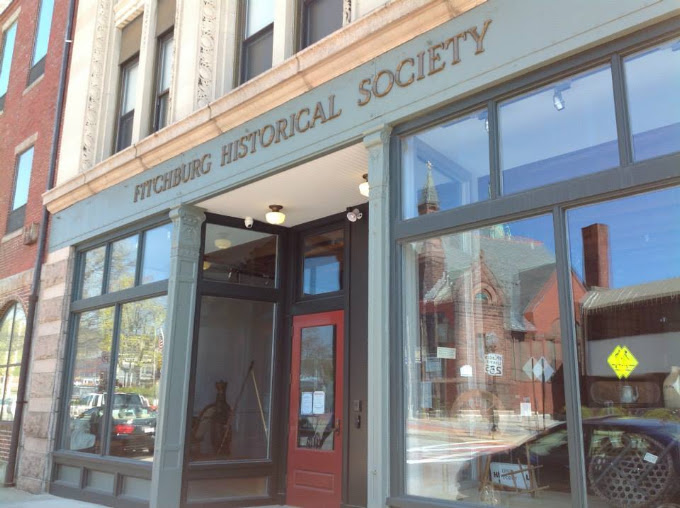
Fitchburg Historical Society

Thanks to the kindness, courtesy, and dedication of Susan Navarre, Executive Director of the Fitchburg Historical Society, and her assistant Loretta, as well as the dogged devotion to the cause by their researcher John, on July 15, 2026 my wife and I were made welcome for a long, productive afternoon of research on the life of George W. Gould in the archives of the historical society. Susan and I had previously exchanged emails. I had observed that while George hailed from Leicester, much of the men in his 25th Massachusetts Company F were natives of Fitchburg, so I reached out via Facebook and the historical society web page to inquire if their archives contained any relevant materials. Susan contacted me shortly thereafter, and promised to look into it, and then followed up once her researcher—the indefatigable John—confirmed my instincts by turning up an entire archives box filled with original materials from Massachusetts 25th Company F, including an original document recording George W. Gould’s death. I could not wait to visit!
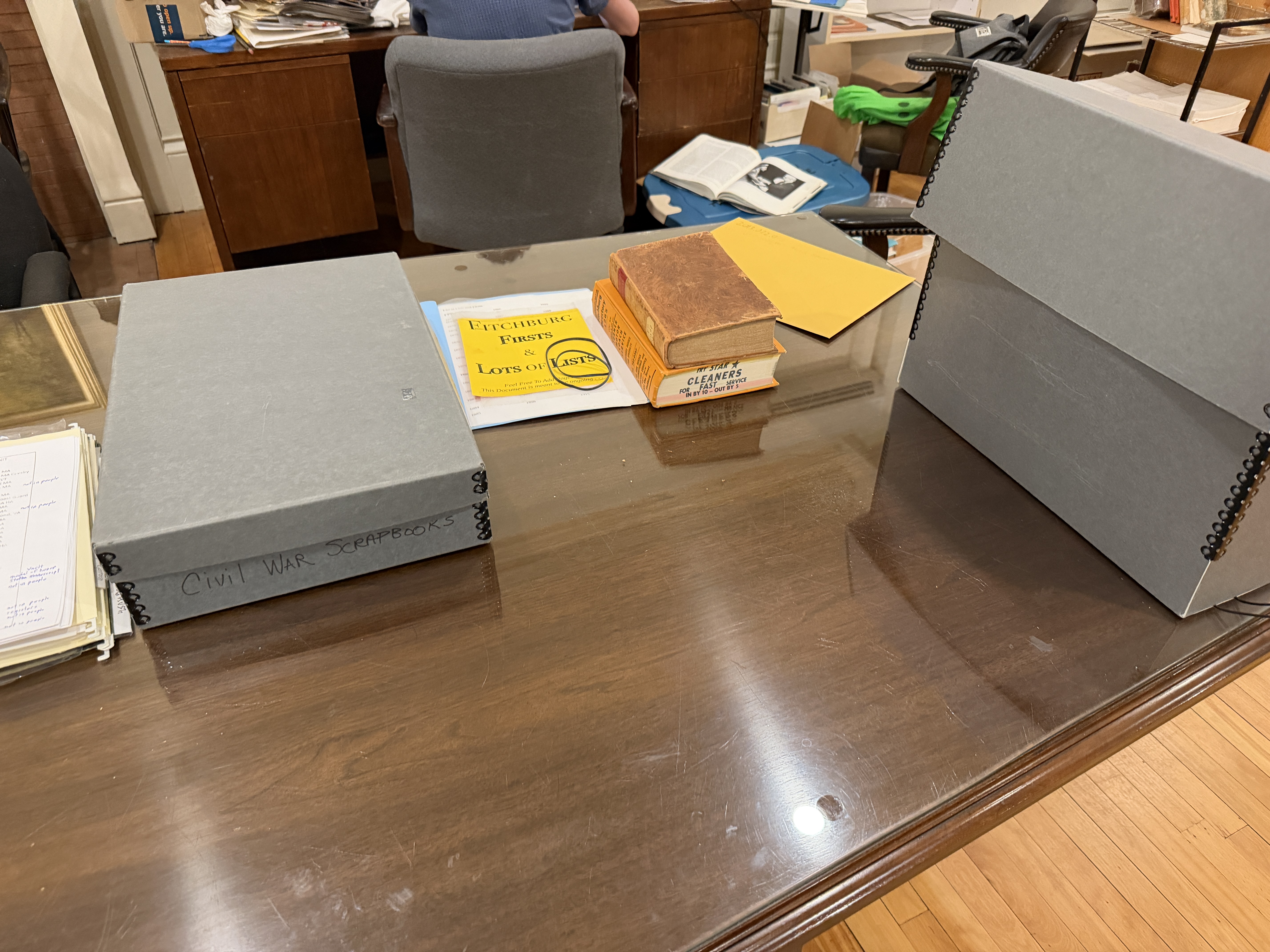
Archive boxes at the Fitchburg Historical Society

The archives of the Fitchburg Historical Society indeed turned out to be a sort of a gold mine, and the box containing materials relevant to Company F appeared untouched—perhaps other than John’s initial examination—since someone roughly stuffed these into the box many years prior, likely after the GAR that once retained these records dissolved following the passing of its remaining veterans decades after the Civil War. It was left to us to carefully unroll or unfold these documents, study and scan them, and then leave them to be repacked into larger, more suitable archive boxes. We worked slowly and with great care to examine these materials, which were generally in a remarkable state of preservation, despite being “crunched” into the box some time ago.
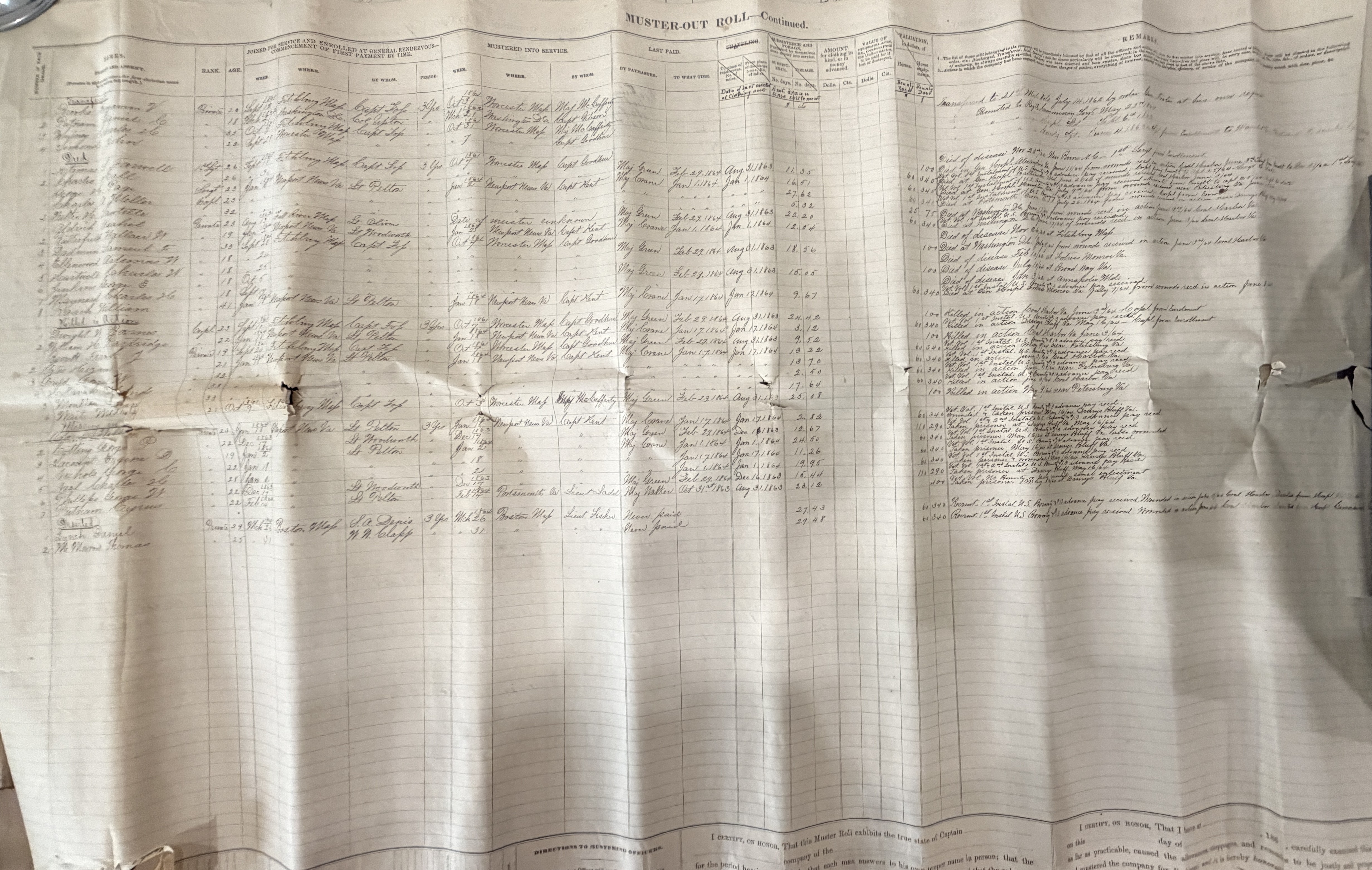
Poor quality iPhone Pic of one of the 31.5” x 22” muster rolls, presented for sense of scale. See scanned images below for clarity

The heart of the collection consists of a number of muster rolls. Most were undamaged and unwrinkled, and for those that were it was hardly fatal; darkness and a favorable climate had left much of the documents close to pristine, more than 160 years after some regimental or company clerk put ink to paper to record the service of men who no longer walk the earth, including George W. Gould. These massive muster rolls: standardized, pre-printed blank forms typically made of machine-made cotton paper—which are about 31.5” wide and 22” high when unfolded or unrolled—are especially unwieldy to work with, and I could not help but wonder how the clerks who filled these in or the officers who approved and signed off on them managed to put these to work when in the field during wartime! It turns out that these were compiled in a two-step process. First, the entire company would be lined up for inspection, and the clerk or orderly walked down the line calling out names and marking down who was present, sick, wounded, missing, or killed into a small notebook. Later, he would sit down with an inkwell and the ledger to permanently record his observations. Even still, working with oversize ledgers on a portable desk in a tent must have posed its own challenges, as these certainly did for us as we unrolled or unfolded these on a library table in far more favorable conditions.
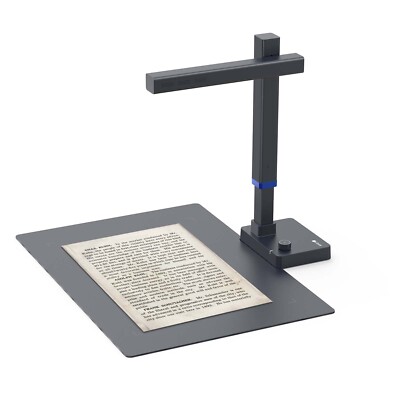
CZUR Scanner

I had brought along my CZUR portable book and document scanner to digitally capture the archival materials without risking damage to the originals. But 31.5” x 22” muster rolls cannot easily be scanned, so I was forced to do so in sections. Even so, the muster rolls are so physically large that I had to focus the scans I would make on portions of each roll that mentioned George W. Gould by name. Then, weeks and months later, I had to invest much time into “stitching” (albeit far from perfectly!) these scans together to recreate the muster rolls in a readable format. (Yellow highlight added over his name to aid location on muster.) This process, in addition to other matters competing for attention in my personal and professional life, is part of the reason why this update to the website is so long overdue.

In the end, I decided to reproduce here four muster rolls:

  • Muster Roll August 31, 1863, which notes George W. Gould was shortchanged funds in his account “Due Gould for error in settlement of clothing acct. allowance for July 10th to Sept. 1st/62 $5.83” (about $64+ in today’s dollars)
  • Muster Out Muster Roll January 17, 1864 that marks the end of George W. Gould’s original enlistment, noting that he was first enlisted as a 29 year old from Leicester on July 10, 1862, the enlistment took place in Worcester, and he was advanced $25 on the enlistment bounty he was promised, as well as $14.26 as a clothing allowance.
  • Muster Return Muster Roll January 18, 1864 that marks George W. Gould’s reenlistment, noting him as a 32 year old farmer born in Providence RI who had reenlisted for a period of three years. It was not to be: he was killed in action at Cold Harbor less than five months later.
  • Return of Men Muster Roll (detailed) March 31, 1864, a more detailed muster which reports that George is a 32 year old farmer born in Providence RI with blue eyes, brown hair, and a light complexion and stands 5’4½” tall, as well as providing enlistment details.
  • Muster Out Muster Roll 1864 that marks George W. Gould as KIA, noting he was last paid $13.70 on January 17, 1864, that he had been paid $60 of his bounty and was owed $340, and that he was “Killed in action Jun 3/64 Coal (sic) Harbor VA

CLICK ON IMAGES FOR CLARITY & READABILITY:
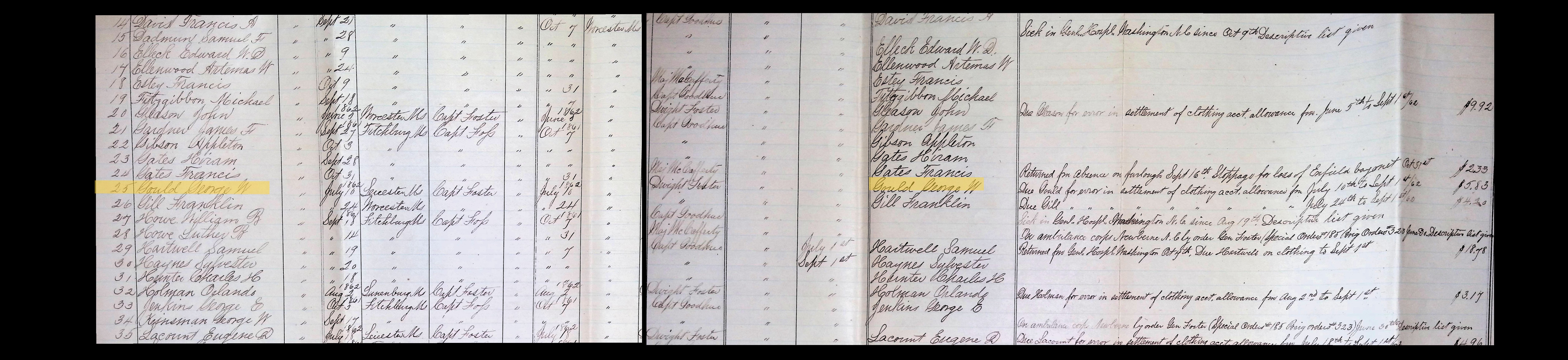
Muster Roll August 31, 1863, which notes George W. Gould was shortchanged funds in his account “Due Gould for error in settlement of clothing acct. allowance for July 10th to Sept. 1st/62 $5.83” (about $64+ in today’s dollars)

Muster Out Muster Roll January 17, 1864 that marks the end of George W. Gould’s original enlistment, noting that he was first enlisted as a 29 year old from Leicester on July 10, 1862, the enlistment took place in Worcester, and he was advanced $25 on the enlistment bounty he was promised, as well as $14.26 as a clothing allowance.

Muster Return Muster Roll January 18, 1864 that marks George W. Gould’s reenlistment, noting him as a 32 year old farmer born in Providence RI who had reenlisted for a period of three years. It was not to be: he was killed in action at Cold Harbor less than five months later.
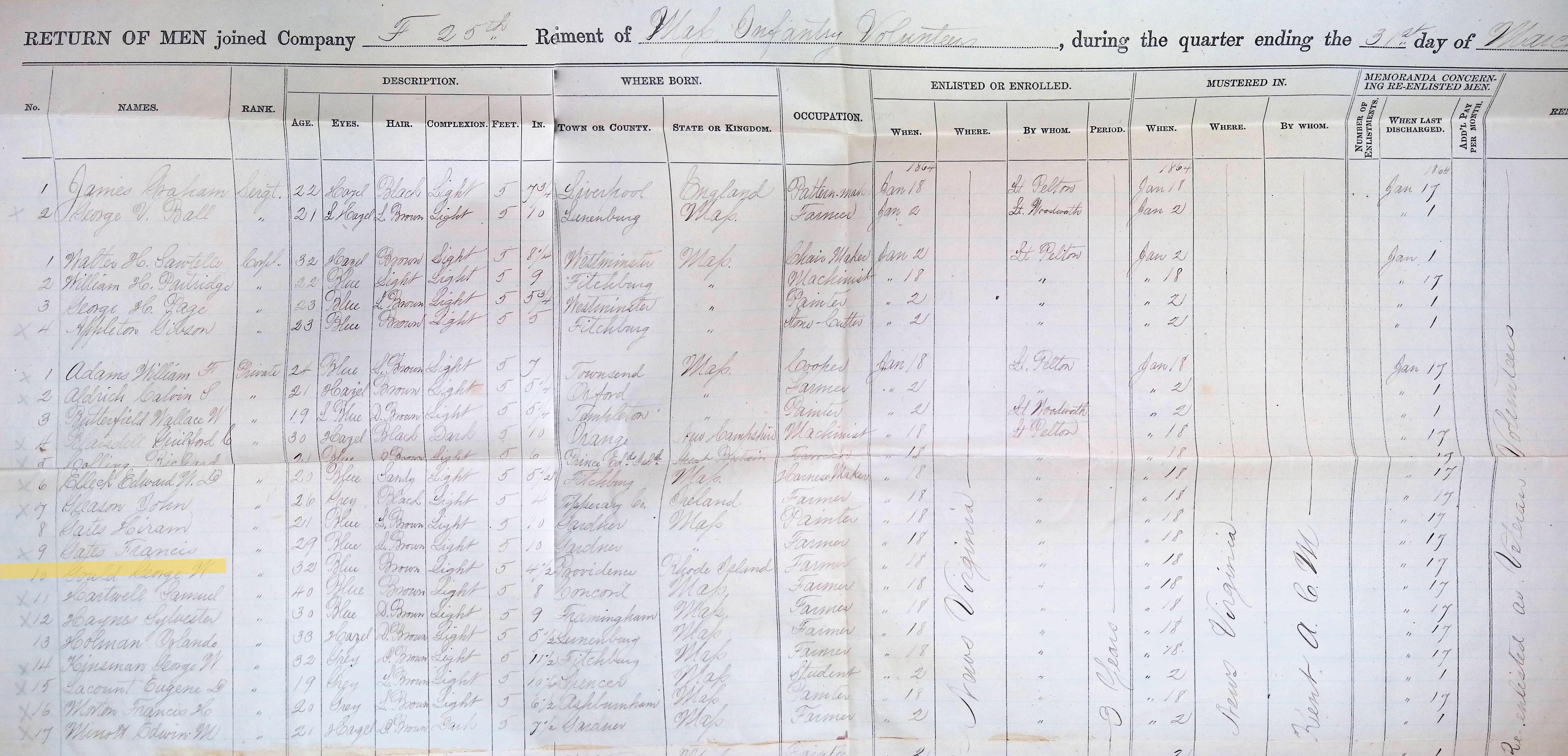
Return of Men Muster Roll (detailed) March 31, 1864, a more detailed muster which reports that George is a 32 year old farmer born in Providence RI with blue eyes, brown hair, and a light complexion and stands 5’4½” tall, as well as providing enlistment details.
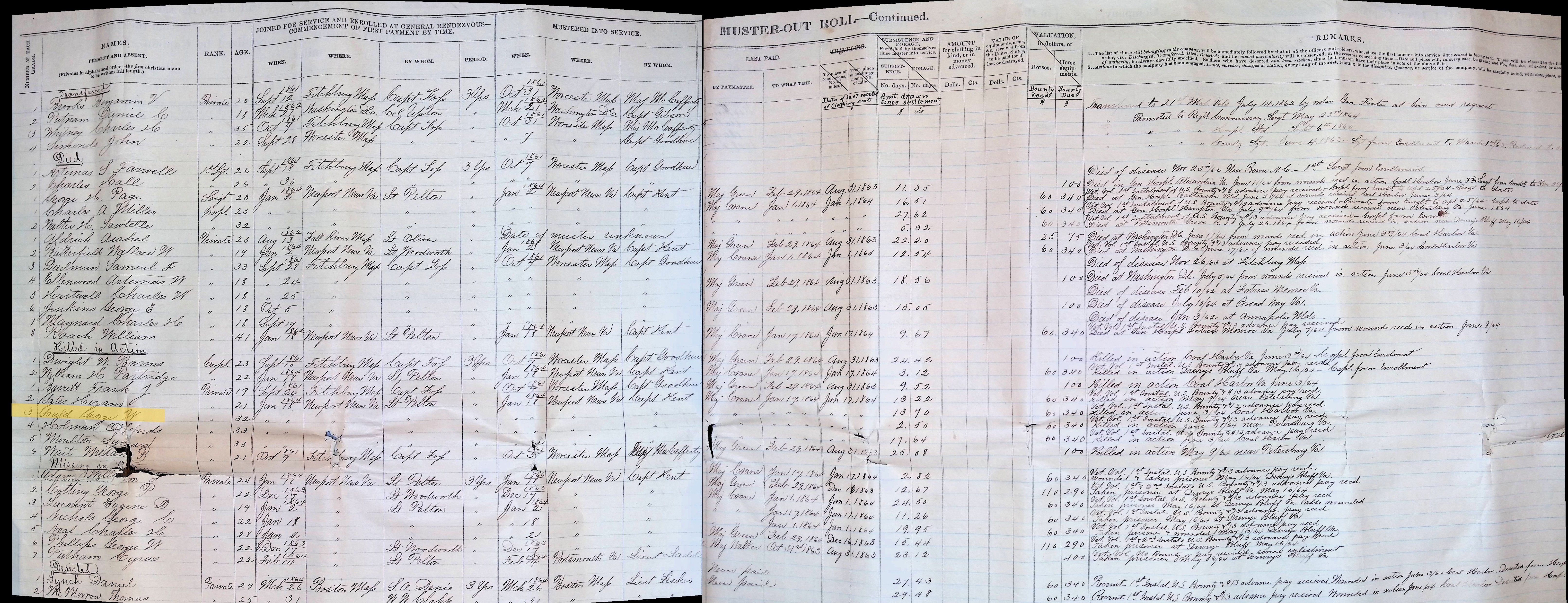
Muster Out Muster Roll 1864 that marks George W. Gould as KIA, noting he was last paid $13.70 on January 17, 1864, that he had been paid $60 of his bounty and was owed $340, and that he was “Killed in action Jun 3/64 Coal (sic) Harbor VA

There is still much more stuff to wade through, and I expect to post additional Fitchburg materials as time permits. For now, here’s one cool example: on the flip side of one of the muster rolls is an account of a skirmish between the Massachusetts 25th and Confederate forces at Batchelder’s Creek, North Carolina, some miles outside of New Bern, that saw the Union prevail and 150 rebels captured along with a wealth of enemy materiel.
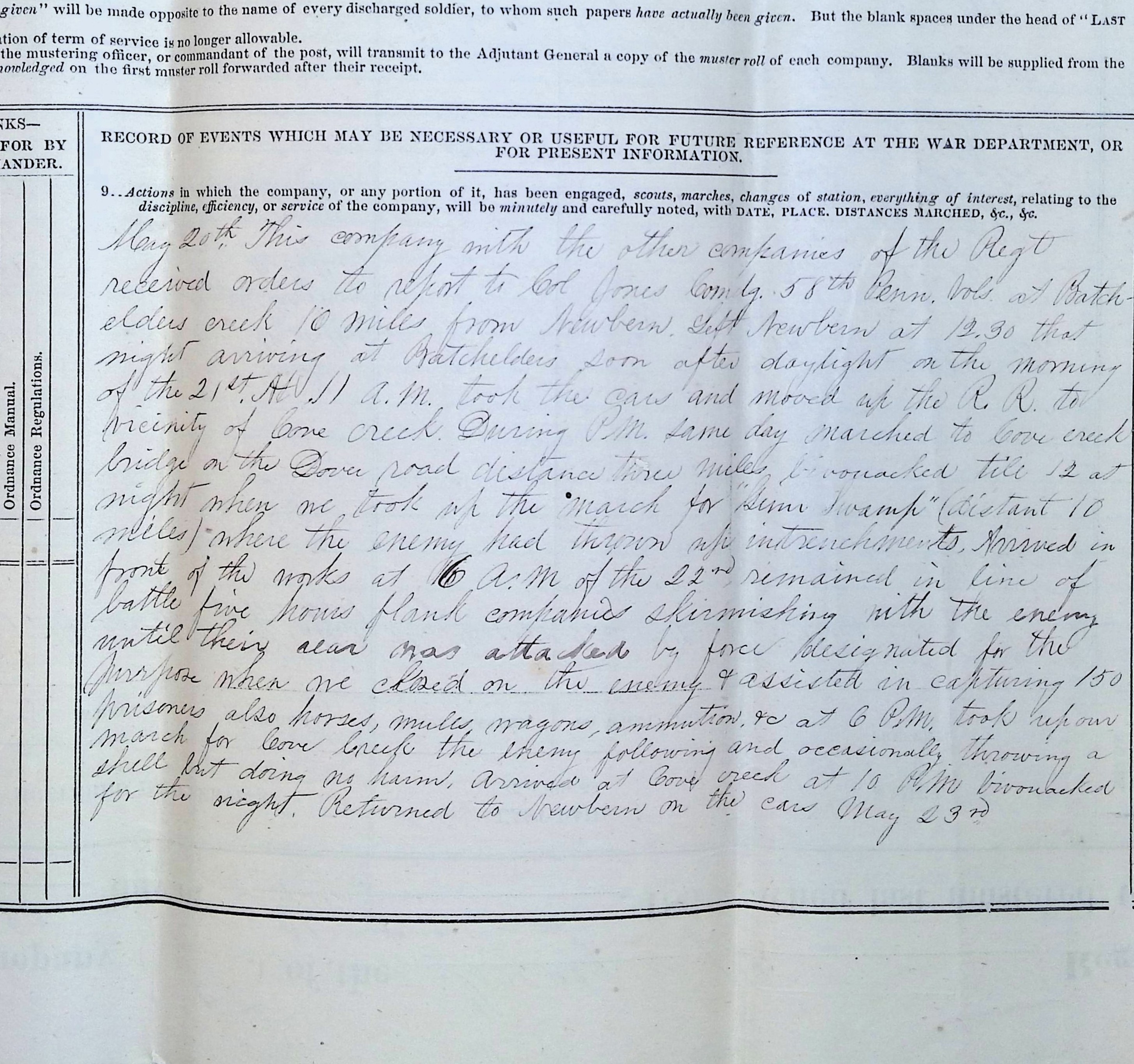
Account of Skirmish at Batchelder’s Creek, May 1863
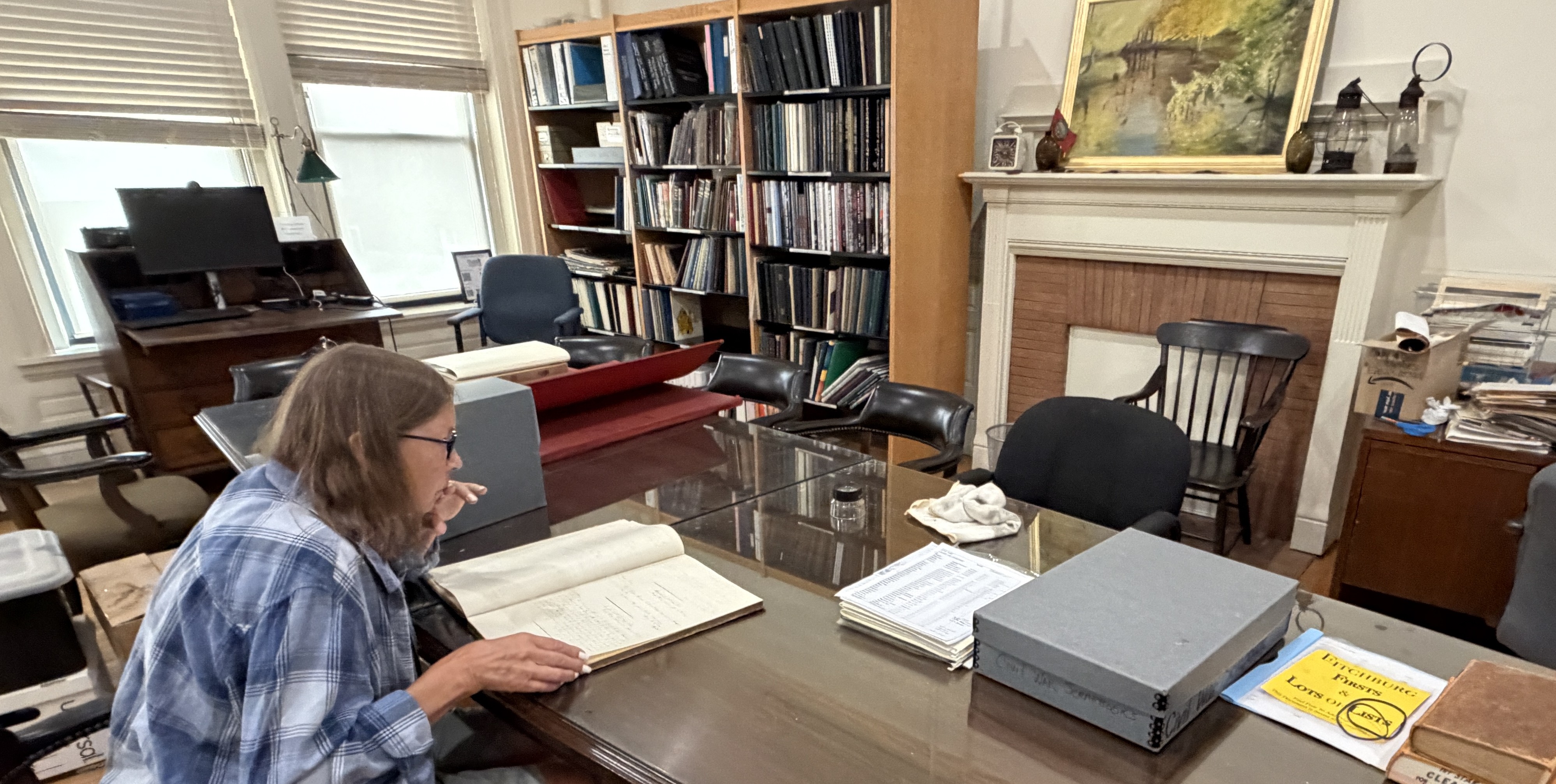
Susan Ference Prager, poring through archives at Fitchburg Historical Society

Throughout the course of the afternoon, my wife Susan Ference Prager proved an invaluable support to my efforts, meticulously going through archive boxes, reading letters, unfolding muster rolls, and examining materials for potential relevance. With some serendipity, Sue happened to come across the Medal of Honor issued to the celebrated hero Orlando Boss, a Company F corporal from Fitchburg who at Cold Harbor on June 3rd under enemy fire first dragged a wounded comrade to safety, then asked the permission of brigade commander General George J. Stannard to go back once more to rescue Lieutenant William Daly. Stannard gave his consent, and Boss returned under withering fire to successfully retrieve Daly, who unfortunately was mortally wounded.
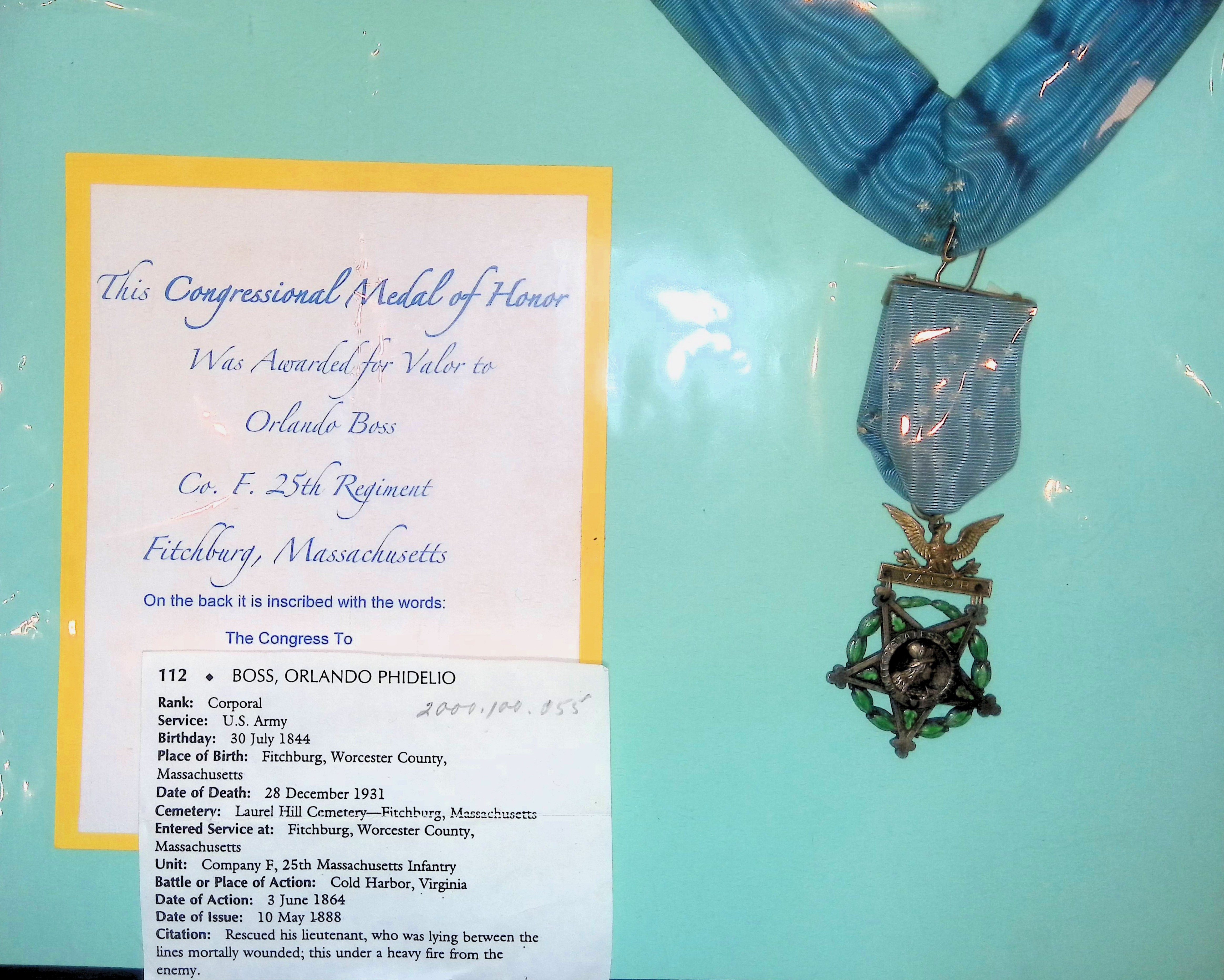
Orlando Boss Medal of Honor
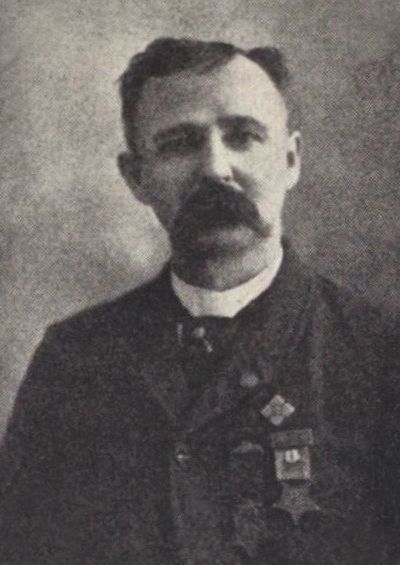
Orlando Boss

Boss’ official Medal of Honor citation reads:

“The President of the United States of America, in the name of Congress, takes pleasure in presenting the Medal of Honor to Corporal Orlando Phidelio Boss, United States Army, for extraordinary heroism on 3 June 1864, while serving with Company F, 25th Massachusetts Infantry, in action at Cold Harbor, Virginia. Corporal Boss rescued his lieutenant, who was lying between the lines mortally wounded; this under a heavy fire of the enemy.”


Curiously, in the same box with the Medal of Honor, Sue found a pair of socks with an unclear provenance. One of the socks is deeply stained. Could these be blood stains? Do they have anything to do with Boss and his medal. Unfortunately, there’s no way of knowing.
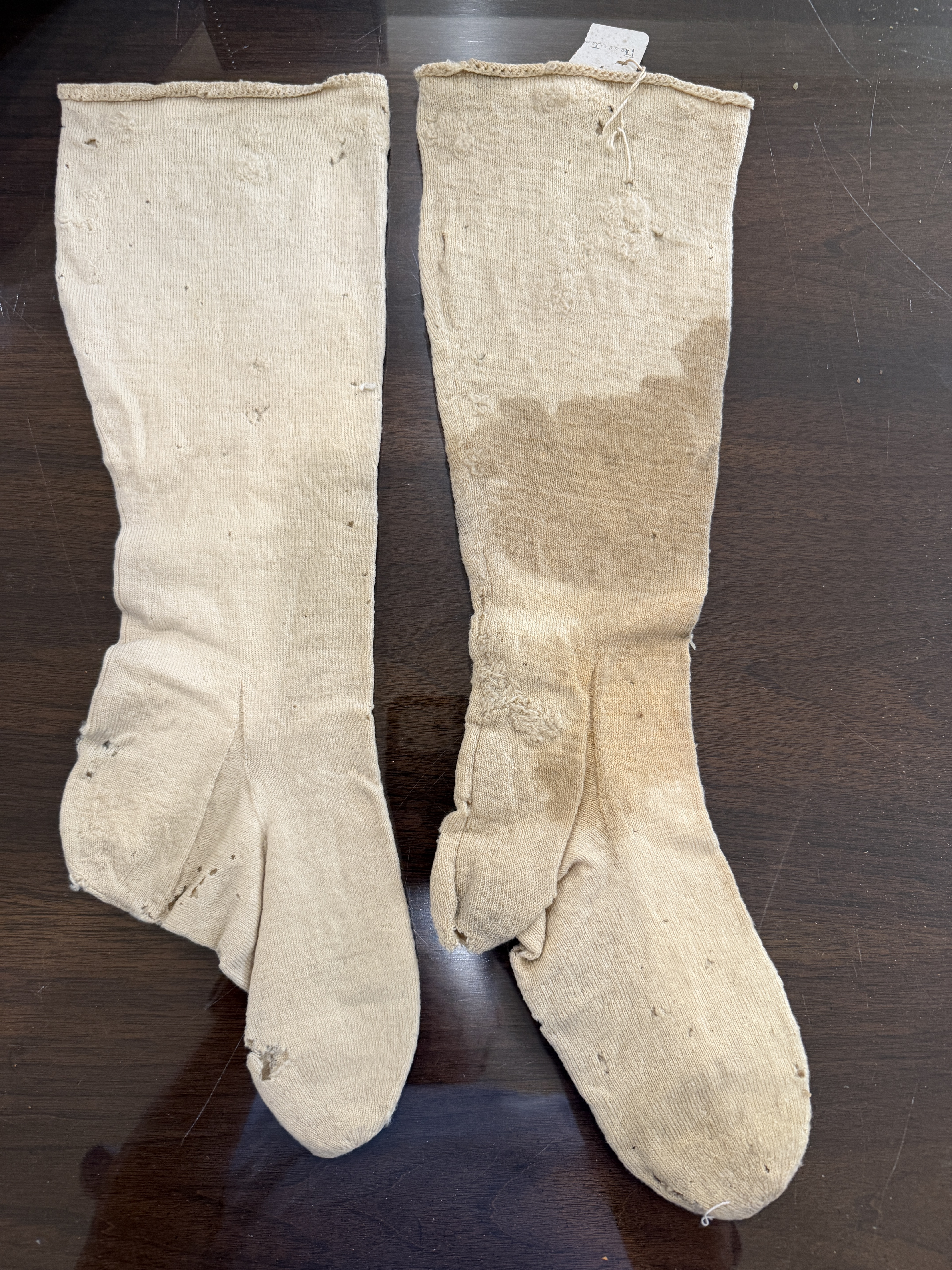
Stained Socks. Could it be blood?

As we were leaving, I was bemoaning aloud the lack of photographs for the men of the 25th–the absent faces to match with the names on rosters. John overheard and his ears pricked up—he dashed into the back and returned with this photo of the officers of the 25th Massachusetts. I smiled; it’s a start!
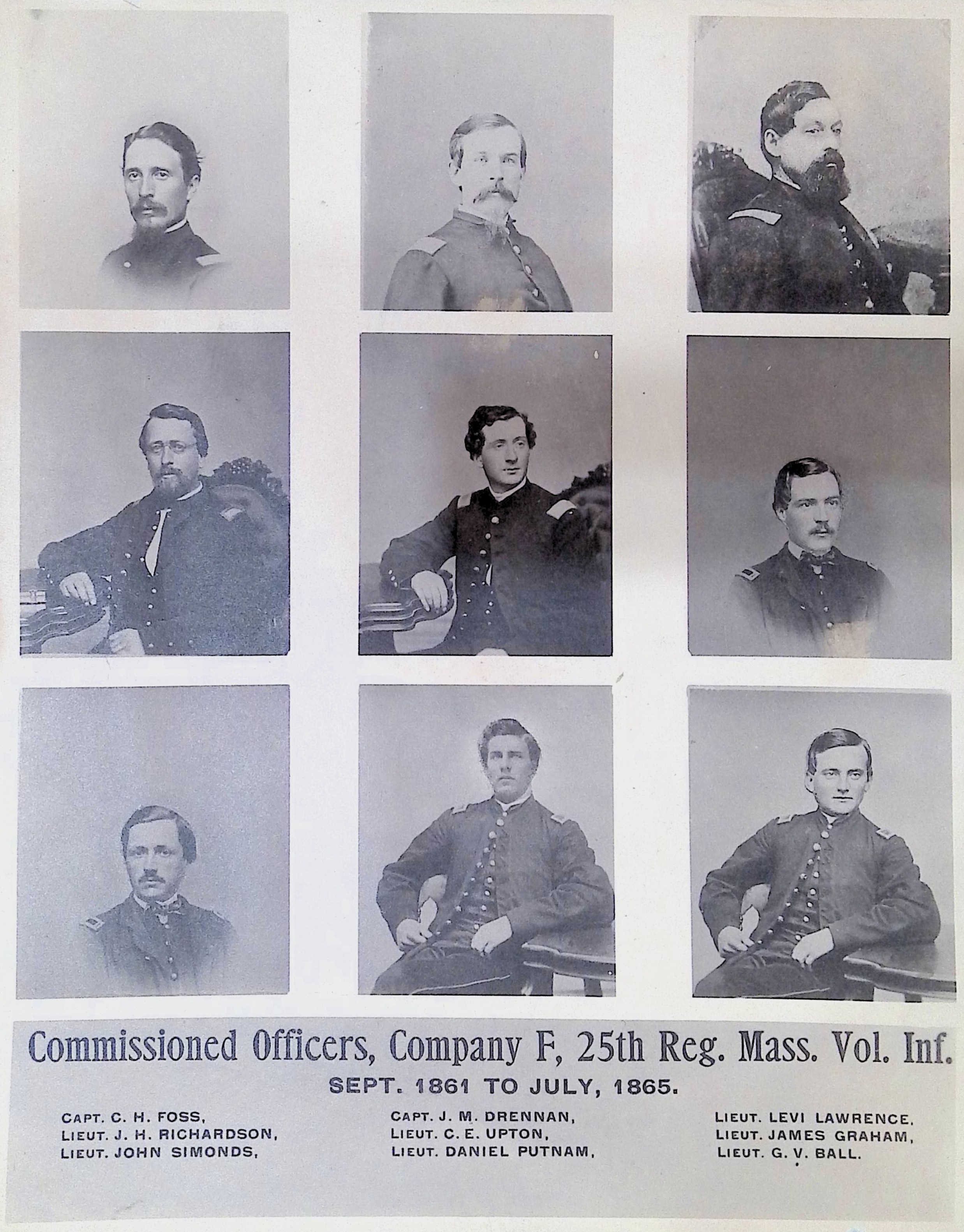
Commissioned Officers, Company F, Massachusetts 25th Regiment

Susan Navarre

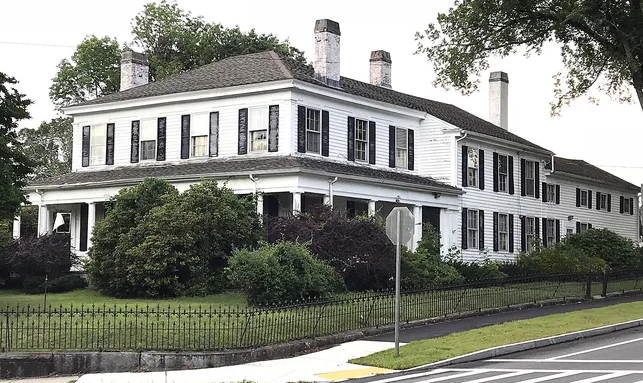
Once more, I would like to underscore my profound gratitude to Susan Navarre and her team for aiding my research efforts prior to and during our visit to the Fitchburg Historical Society, which it should be noted boasts a fine museum to Fitchburg history on its ground floor. I would encourage my readers to visit the historical society and either take on a membership or donate to further their work preserving and promoting local history.  Much more information can be found here: Fitchburg Historical Society
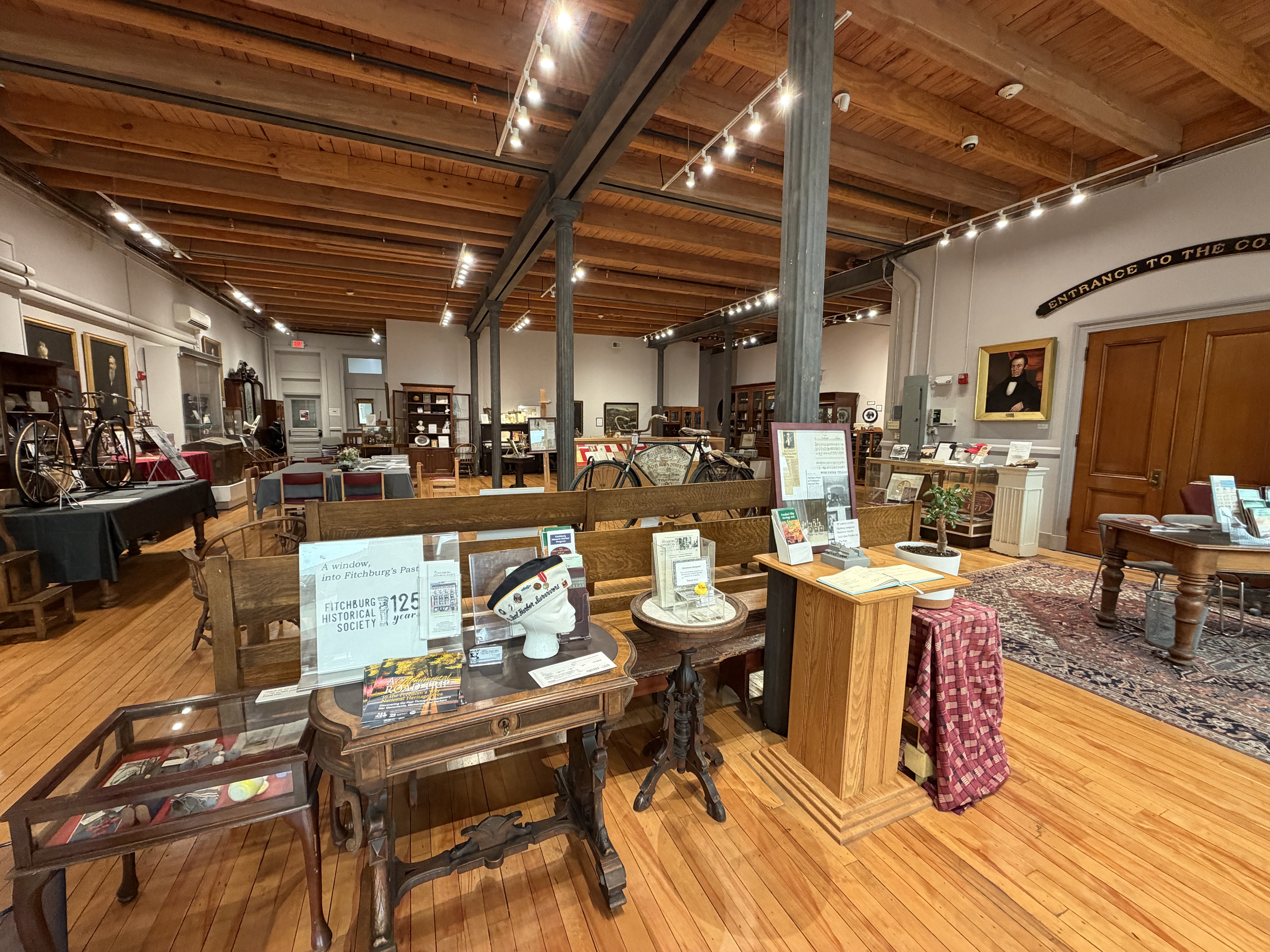
 

Fitchburg Historical Society Museum
 

Private George W. Gould Killed at Cold Harbor 162 Years Ago

Featured

June 3, 1864—162 years ago today—marked the final day of the battle of Cold Harbor and the one that saw the most significant fighting, as Grant’s Union forces repeatedly and unsuccessfully attempted to break through heavily fortified Confederate lines. The Union suffered heavy casualties over several days of combat that totaled nearly 13,000 killed, wounded, captured, and missing. Among the 1,845 killed in action was Private George W. Gould, an ordinary soldier from Leicester, Massachusetts, who fell on June 3rd during one of the waves of fierce assaults made by the 25th Massachusetts Volunteer Infantry, giving up his life to save the Union and end human chattel slavery.

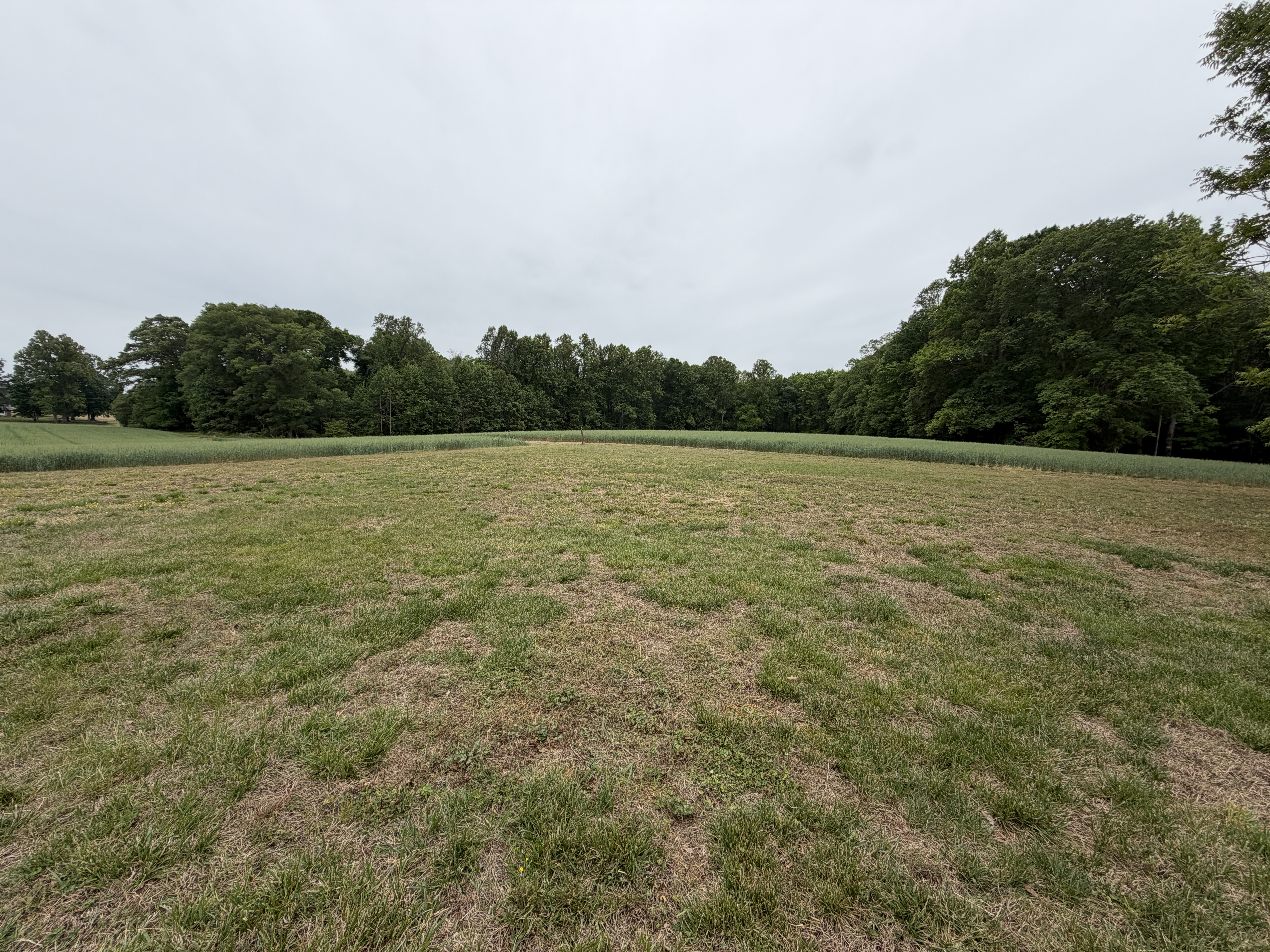
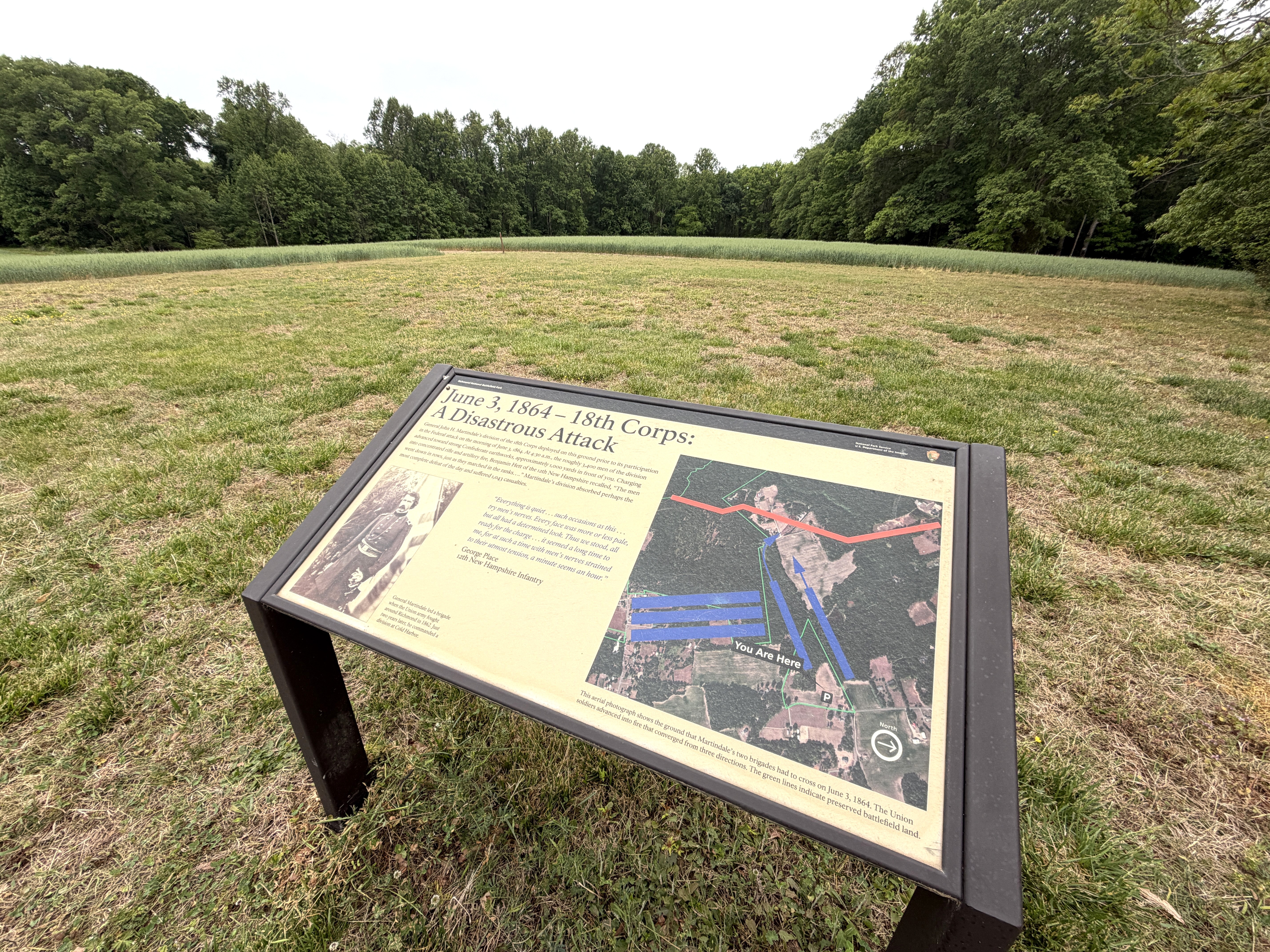
Battlefield marker oriented towards the field at Cold Harbor where Pvt. George W. Gould was killed on June 3, 1864. Stan Prager visited this hallowed ground on May 6, 2026 & took this photo.

This website was created ten years ago to honor the sacrifice of George W. Gould, hosting his previously unpublished letters and championing his role as a common soldier who along with so many thousands of others during four years of Civil War gave up everything so that the United States would endure as one nation, and that slavery, the central cause of secession and war, would be forever abolished.

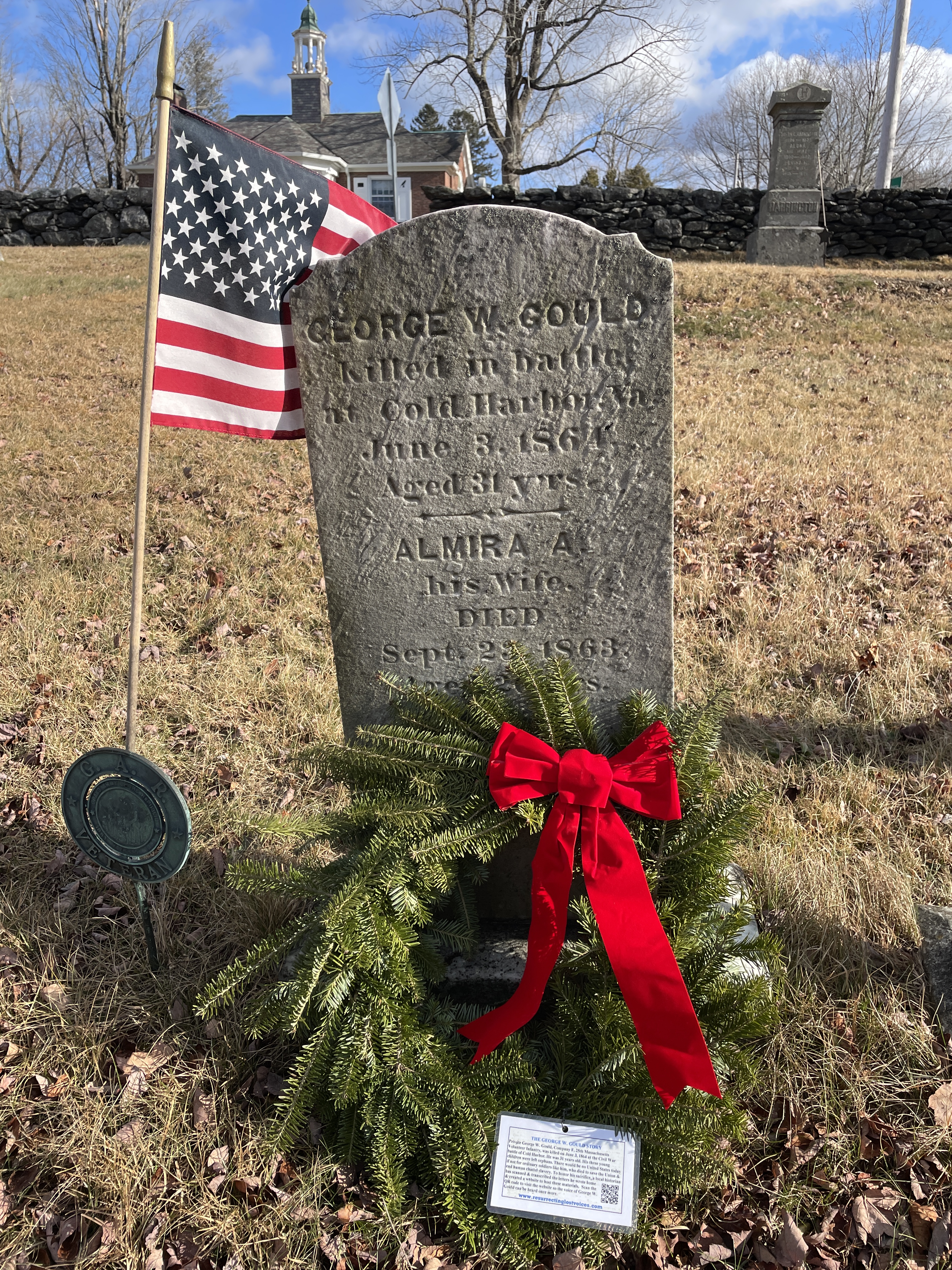
Flag placed on the grave of George W. Gould in Paxton, MA for Memorial Day 2026

Fittingly, I visited Cold Harbor for the first time just weeks ago, and I looked out over the now quiet fields where the battle once raged and where Private Gould lost his life. I was welcomed by NPS ranger Mike Gorman, who could not have been more gracious. He shared a wealth of information about the battle while clearly projecting his pride in his role helping to preserve this sacred ground. I was at Cold Harbor with a larger tour group, so I could not get as deep in the weeds as I hoped, retracing the steps George Gould took as he stared into eternity, but I do hope to return again soon for a private tour and a closer look.

Gazing towards the field at Cold Harbor where Pvt. George W. Gould was killed on June 3, 1864. Stan Prager took this photograph during his visit on May 6, 2026.

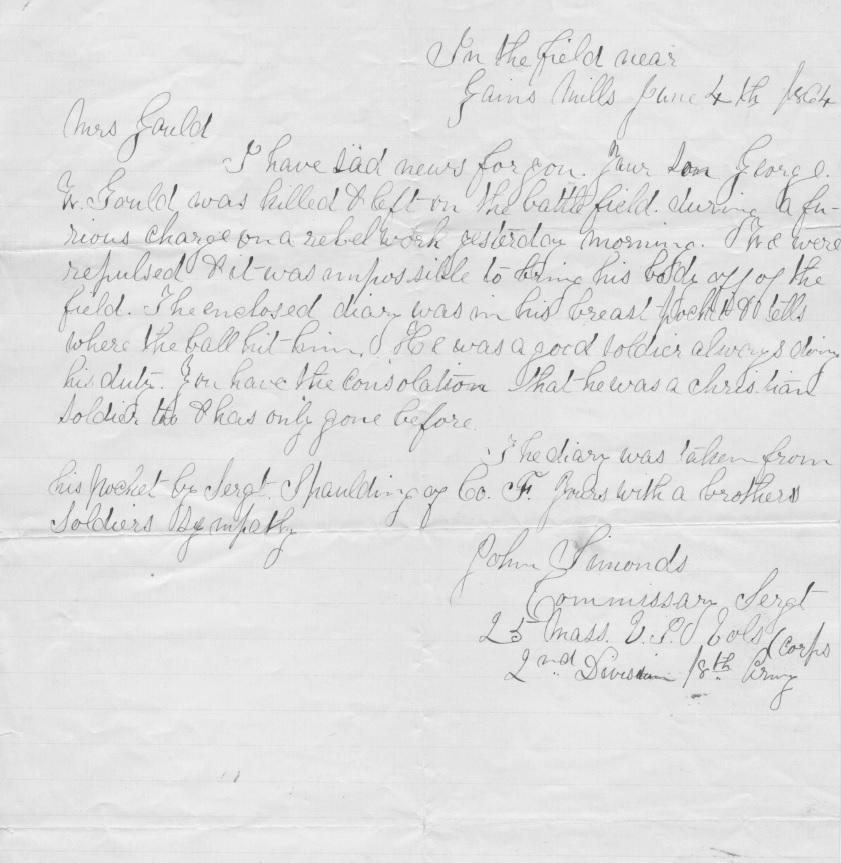
Still, on the  day of my visit, I felt myself profoundly moved as I stood on the battlefield not far from where Private Gould breathed his last. His was likely a dreadful ending. The commissary sergeant’s letter to Gould’s mother reporting his death notes that “The enclosed diary was in his breast pocket & it tells where the ball hit him.” The diary is lost, but some might interpret that sentence as an indication that the diary itself manifested physical signs of “where the ball hit him.” I would like to believe that, for that would mean he made a quick end, but I think it is more probable that he was mortally wounded and instead lay there some time after and recorded in his diary “where the ball hit him.” In that case, it is awful to imagine how long he may have remained on the field suffering before he expired. We have no way of knowing that, but we do know that in the aftermath of the battle, Lee was adamant that the wounded could not be tended to until a white flag was offered, as was customary at the time. A horrific four days passed before Grant swallowed his pride and agreed to be the first to fly that white flag to allow a brief truce to retrieve the injured, but by then almost all were dead of their wounds, dehydration, and extreme heat. I would add that I believe the date that appears on the letter to George’s mother—June 4th—was a polite lie born out of kindness, since it would have been impossible for his body to be retrieved until many days later.

On the last day of his life, Private George W. Gould’s saw action with Brigadier General George J. Stannard’s “Star Brigade”—1st Brigade, 2nd  Division, XVIII Corps—with 4 regiments comprised of just 600 men that included the Massachusetts 25th formed up in a double column of 4 stacked lines—rather than deploying in a traditional, extended skirmish line—a relatively recently devised battlefield tactic designed to punch through Confederate works with a compact assault column that at Cold Harbor on June 3, 1864 resulted in shattering losses inflicted by heavy artillery and infantry fire from entrenched forces that could not be dislodged. The 25th Massachusetts suffered a staggering 69% casualty toll that day: 215 men fell out of 310 on the field and 74 of those died, including Private Gould—among the highest percentage casualty rates of any single regiment in a single battle during the war!

Grant was pilloried by the public for the casualties that day, and he himself later voiced regret over the failed final assaults, but while Lee suffered fewer losses, he was unable to replace them, so the Army of Northern Virginia was left weakened. In the grand scheme of things, the Battle of Cold Harbor was just one piece of Grant’s Overland Campaign, and while the stalemate there stymied his momentum, Grant’s strategy would eventually win the war. As we honor Private George W. Gould, we likewise honor every soldier who made the ultimate sacrifice for this righteous cause.

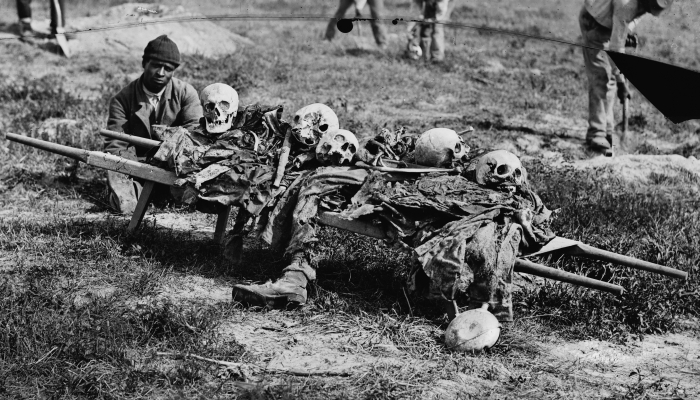
Remains of Union war dead at Cold Harbor


Memorial Day 2026: A Decade of Honoring George W. Gould

Featured

Flag placed on the grave of Pvt. George W. Gould for Memorial Day 2026

In 2016—ten Memorial Days ago—I launched the Resurrecting Lost Voices website to honor Private George W. Gould, an ordinary soldier from Leicester, Massachusetts who went on sacrifice it all at just thirty-one years old on the Cold Harbor battlefield in 1864, one of hundreds of thousands of others who gave their lives to save the Union and end human chattel slavery.

I had had the good fortune to come across a collection of his previously unpublished letters through the courtesy of then-grad student Morgan Kolakowski Zhang, and while digitizing and transcribing these was moved by the eloquence and intellectual sophistication of this otherwise unremarkable farm boy from Western Mass who left his young wife Mira and three little girls to go off and fight for the Union with the 25th Massachusetts Volunteers. Tragically, his wife died of typhoid fever while he was deployed many hundreds of miles from home, and his young children sent to stay with in-laws he did not much care for.

He writes home surprisingly articulate letters about his religious convictions, his patriotism, and his grief at the loss of Mira: “It is now about three weeks since she died and I can’t realize that I shall see her no more but if I should live to get home and see the vacant chair and the three little motherless children I shall then realize my great loss.” When the time comes, George agonizes over reenlistment but finally goes ahead, likely motivated not only by patriotism but by the month-long furlough home to see his family, as well as the reenlistment bonus that would go a long way towards caring for the children. When he returns to the front, there is one letter full of foreboding, and then the final correspondence I have is not from George but from his commissary sergeant, delivering the sad news to his mother that he was killed in action. George was dead; the three little girls now orphans.

George began his service at a training camp in New Bern, North Carolina, and ended it in the dirt at Cold Harbor, Virginia. I first read his letters shortly after I returned from visiting the extant trenches at New Bern from the battle that handed that geography over to the Union. Fittingly, I visited Cold Harbor for the first time just weeks ago. I cried the very first time I read that letter reporting his death. There are times I still choke up when considering his loss of Mira.

Laminate tag I attach to flags and wreaths to encourage those who pass by to read his story.

Historian Stan Prager, visiting the grave for Memorial Day 2026.


George’s story is, of course, only one tiny tale in a grand constellation of other stories by many hundreds of  thousands of others, but viewing the life and death through the lens of a single soldier who was there personalizes it, and better helps you understand the Civil War experience, more than 160 years after Appomattox.

Once I read George’s letters, I set out to learn more about him. I located his grave, studied his service records, probed his genealogy, and even came across a plaque commemorating his death along with others from his hometown. I decided to honor him further by adopting his gravesite, visiting it several times a year to place flags on it and, in December, laying a wreath there for “Wreaths Across America.”  I have always felt that in honoring him so, I can likewise honor all those who died for our country.

Memorial Day was originally Decoration Day, established in 1868 to decorate the graves of fallen Civil War soldiers. Therefore, I thought it fitting to launch this website on Memorial Day 2016 and—a decade later—to take a moment on Memorial Day 2026 to offer another huzzah to Private George W. Gould!

Grave of George W. Gould, Memorial Day 2016, at launch of this website

Presentation to the Leicester Historical Commission and the Friends of Swan Tavern

Featured

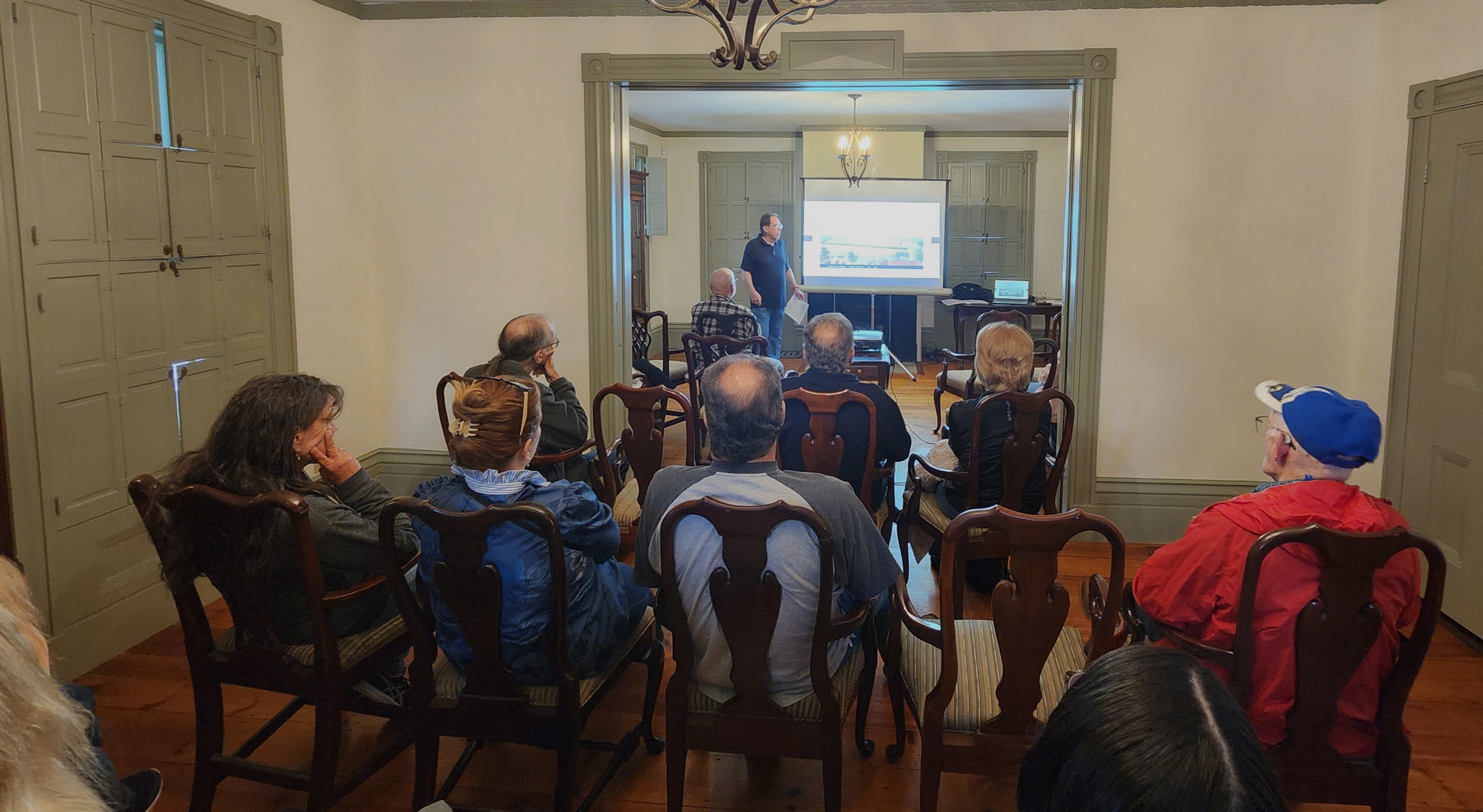
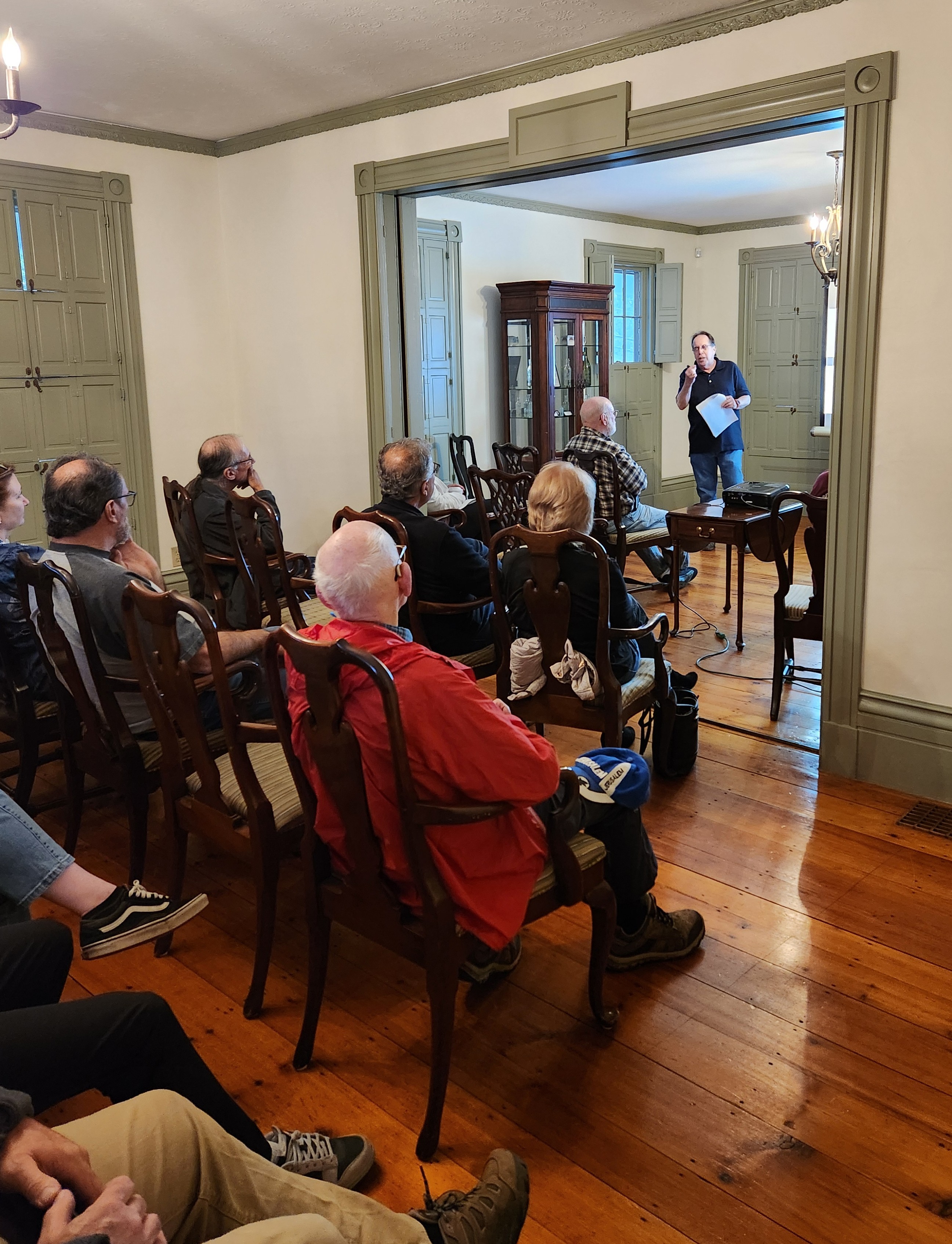
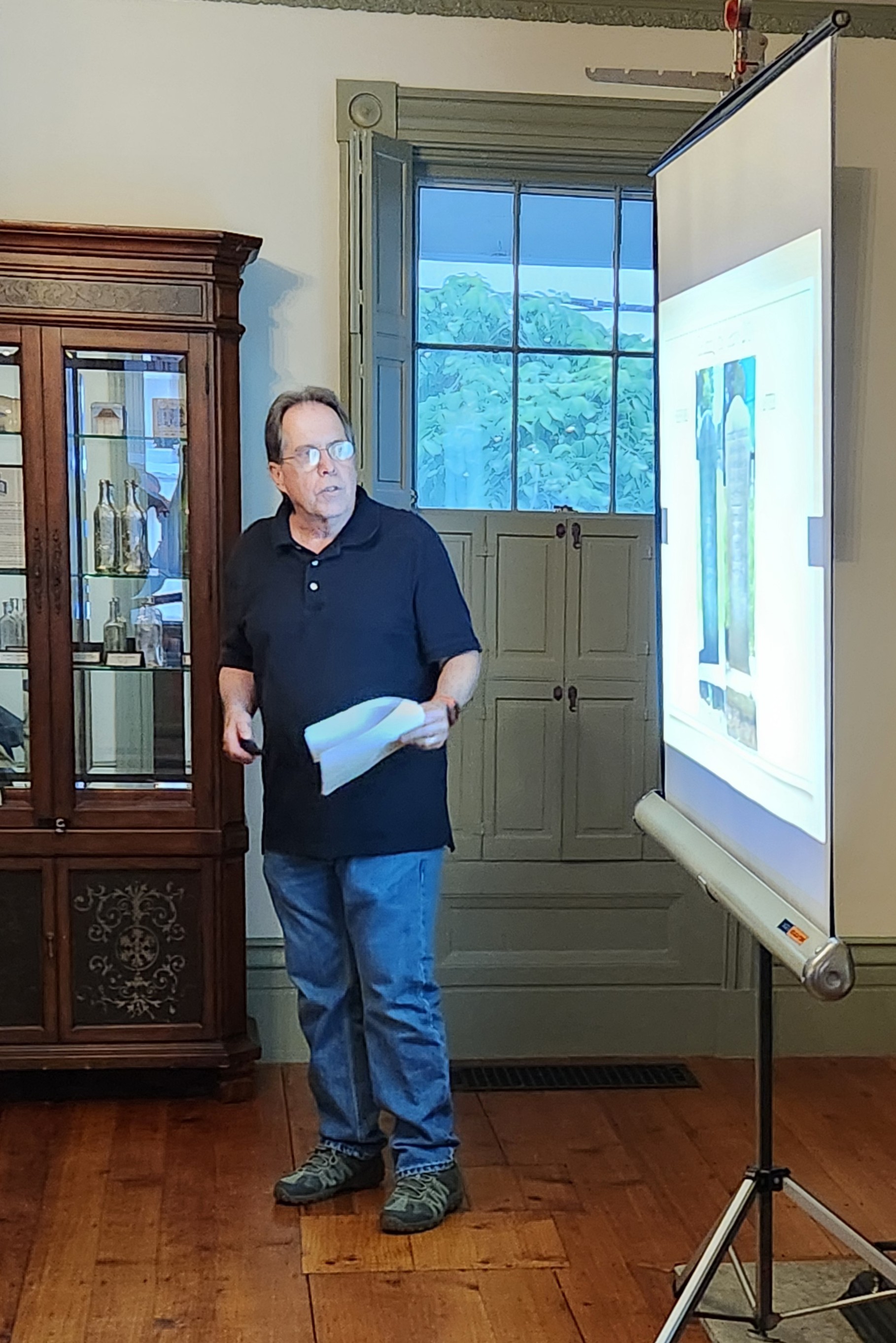
I had the honor to be invited to deliver a presentation on Leicester resident Private George W. Gould to the Leicester Historical Commission and the Friends of Swan Tavern on May 21, 2026 at the historic Swan Tavern-Leicester Historical Museum. The beautiful Swan Tavern, Leicester’s oldest surviving structure which dates back to 1768 and serves as home to the historical commission, proved an ideal setting for presenting to a large an enthusiastic audience of attendees, who asked great questions and offered several positive suggestions for the continuing work on the George W. Gould project. Special thanks to Joe Lennerton, Chair of the Leicester Historical Commission, for putting this event together, and I want to express my gratitude to everyone who attended and participated. And Huzzah to Pvt. George W. Gold!

If you would like to donate to a great cause for the ongoing preservation efforts of Swan Tavern, as well as to further historical research and celebrate local history, you may contact the commission here: Leicester Historical Commission


Gould’s Death Notice in the Worcester Daily Spy, July 13, 1864

Featured

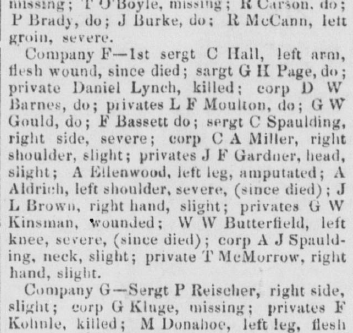
This is a close-up of Pvt. George W Gould’s death notice in the Worcester Daily Spy, July 13, 1864. This edition contains the complete list of casualties of the 25th Volunteer Infantry from the Cold Harbor engagement that ended on July 3rd, the day Pvt. Gould was killed in action. Note that the abbreviation “do” is short for ditto.

Here is a copy of the entire page of that day’s paper, which includes the full casualty list. This is page 2 of that day’s paper, which also features other news on the course of the war. Click on thumbnail below to access the PDF:

digitization thumb

“We the People Extra: Preserving Memories From the Civil War” on Western Mass News

Featured

Western Mass News TV launched a new video podcast series for their streaming app, and the very first episode of “We the People Extra” celebrating the 250th anniversary of the United States was this 20 minute panel discussion with Stan Prager about the George W. Gould story. It includes the original broadcast of the “We the People” episode previously aired, and the panel discussion begins around 5:15. Overall, I was very pleased with the way it turned out and honored that they invited me to launch the series. The episode is here:

Phil Kearny Civil War Roundtable Presentation

Featured

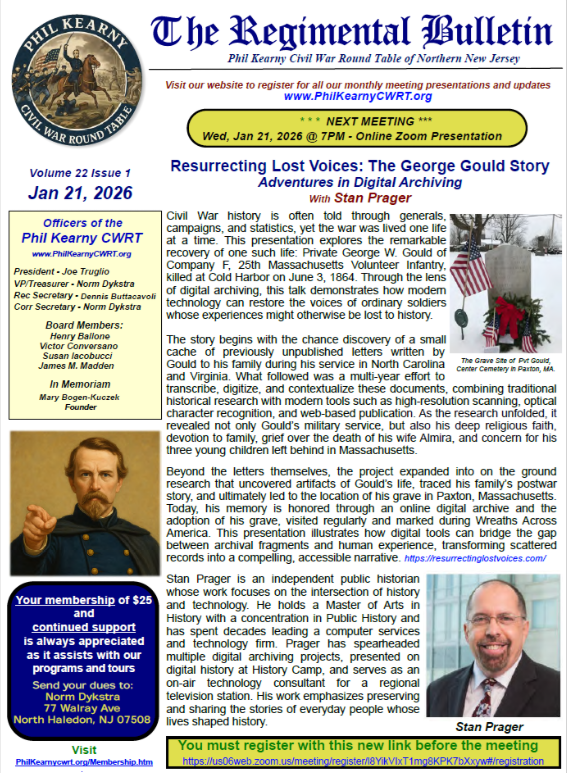
On January 21, 2026, I was honored to be invited to present “Resurrecting Lost Voices: The George W. Gould Story … Adventures in Digital Archiving”  via zoom  to the Phil Kearny Civil War Roundtable of Northern New Jersey.

They were a great audience, and I had a terrific time speaking to them. They also did a really nice write-up on my work with the ongoing Gould project, which is featured on the front page of the latest edition of their regimental bulletin (below) 

Honoring Pvt. George W. Gould For Wreaths Across America 2025

Featured

Honoring Pvt. George W. Gould … For Wreaths Across America 2025, I made the long drive again to Paxton MA to lay a wreath on the grave of my adopted Civil War soldier, Pvt. George W. Gould of the 25th Mass. Vol. Infantry, who sacrificed his life at Cold Harbor in 1864 to save the Union & end human chattel slavery. At the same time, I seek to honor all those who died for our country. There’s a tag on the wreath that tells his story & a QR code link to this website that I created to honor him

Stan Prager Presents “Resurrecting Lost Voices: Pvt. George W. Gould” at “Our Roots, Our Voices” Event

Featured

I was honored to be invited to present at the event “Our Roots, Our Voices,” a celebration of American History, on Saturday November 8th at 9:30AM in South Hadley MA. Fittingly for the theme of the event, my topic was Resurrecting Lost Voices, the George W. Gould story.

For the 250th, on July 4, 2026, the committee made the complete video available to the public:


This is the flyer describing the event:


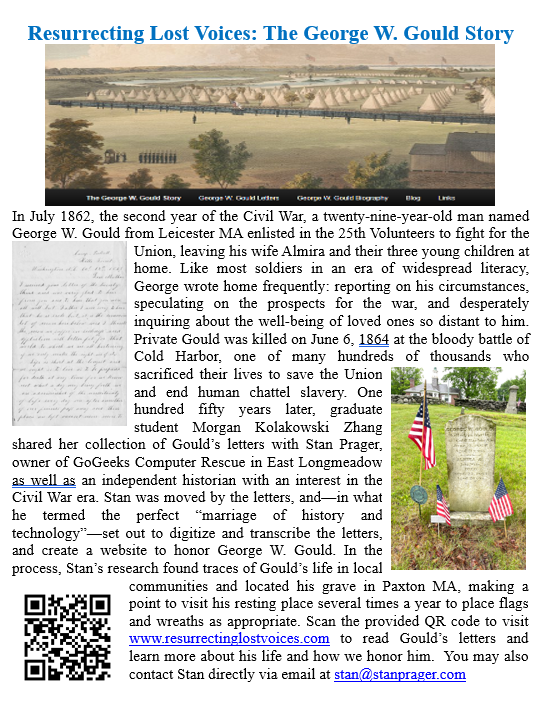
This is the handout I created and distributed at the event:

Resurrecting Lost Voices Handout


“We the People: How One Western Mass Man Honors the Legacy of a Civil War Soldier” on Western Mass News

Featured

As part of their “We the People” series celebrating the 250th birthday of the United States, news anchor Chris Pisano of Western Mass News TV interviewed Stan Prager about the George W. Gould project and the creation of this website honoring him. The segment aired on WMN on September 26, 2025. This is an enhanced version of the video, with corrections to minor errors from the original broadcast:


This video is the original as it was first broadcast:


A link to the story at Western Mass News is here: How One Western Mass Man Honors the Legacy of a Civil War Soldier

Special thanks to Patrick McKeon, a local historian and member of the Leicester Historical Commission, who contributed to this story. I remain extremely grateful to Patrick for his ongoing help and support with this project.